Inicio / Libros / CARAVAGGIO'S EYE
0 artículos
0€
ver compra
pvp.48.37 €
[Disponible en 10 ó 15 días]
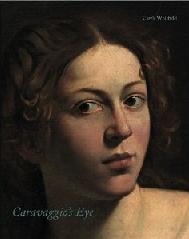
This book concentrates on a few crucial years of Caravaggio's development, in order to cast light on what made the artist such a revolutionary figure. It argues that this revolution was one of technique rather than style, and involved the sophisticated use of a camera obscura and so-called 'burning' or parabolic mirrors, exploiting new advances in glassmaking and optics. Because the results Caravaggio obtained by his new methods were so different he created a sensation, although these innovations were rapidly assimilated and the artistic establishment worked successfully to restore their way of doing things, so that the true novelty of his art in the 1590s has been obscured.Clovis Whitfield uses a lifetime of study of the period to discuss not only Caravaggio's technology but also his patronage and cultural context, the Rome of Clement VIII, concentrating particularly on Caravaggio's homosexual patron Cardinal Francesco Maria Del Monte and analysing the taste and role of his other early supporters as well. Whitfield's Caravaggio was the son of a bricklayer, untrained in traditional artistic disciplines, who instead took the dramatic step of painting exactly what he saw with his reproductive aids. Galileo's hypothesis drawn from observation and Caravaggio's novel description of what he saw were, according to Whitfield, parallel attempts to explain features of the many-layered reality that surrounds us.
The book features remarkable new photographs and especially details of Caravaggio's paintings and those of his followers and rivals that will dramatically refresh hackneyed perceptions of this crucial figure and his world.

he Italian artist Caravaggio (1571-1610) had a profound impact on a wide range of baroque painters of Italian, French, Dutch, Flemish, and Spanish origin who resided in Rome either during his lifetime or immediately afterward. ...
pvp.48.24 €
With the creation of the dramatic Supper at Emmaus and a series of intimate oil sketches of Christ on oak panels, Rembrandt van Rijn (1606-1669) overturned the entire history of Christian art. Traditionally, when depicting ...
pvp.58.5 €
Universally recognised as a brilliant and gifted eighteenth-century artist, Zoffany was regarded by Horace Walpole as one of the three greatest painters in England, along with his friends Reynolds and Gainsborough. He has remained without ...
pvp.95.33 €
The State Hermitage Museum in St. Petersburg houses a relatively small but choice collection of 16th- to 19th-century British paintings, among them Thomas Gainsborough's vibrant Portrait of "A Lady in Blue" (c. 1770) and his ...
pvp.104.0 €
Ce catalogue accompagne les expositions organisées par les musées des Beaux-Arts d'Orléans et de Tours, en concertation avec la ville de Richelieu, et se veut un ouvrage de référence consacré aux collections du cardinal de ...
pvp.51.25 €
The role of the frame in art can refer not only to a material frame bordering an image, but also to a conceptual frame - a text, for instance, which is to serve as a ...
pvp.70.29 €
El Volumen II de este catálogo de la obra de Zurbarán se ocupa de los numerosos conjuntos que, aún saliendo de la mano del pintor, tuvieron una importante y frecuente intervención de su taller. La ...
pvp.135.0 €
Ford Madox Brown (1821-1893) is known predominantly for his close association, from 1848, with the Pre-Raphaelite Brotherhood and for his masterpiece, The Last of England (1852-5), with its poignant imagery of a young emigrant couple ...
pvp.174.39 €
The Later Stuarts spanned the reigns of monarchs James II, William and Mary and Queen Anne. It was a period in which Britain was newly established as a major European power, and which encompassed outstanding ...
pvp.149.5 €